

Zinc-Nickel Plating Services.
- Quick Specifications
Lead Time
10-14 days
Materials
Steel Substrates
Certifications
ISO 9001, Nadcap
Industries
Aerospace, Defense, Automotive
What Is Zinc-Nickel Plating?
Zinc-nickel plating is an advanced electroplated coating that deposits an alloy of zinc (typically 85-88%) and nickel (12-15%) onto steel substrates. This alloy coating provides corrosion resistance 10-15 times superior to standard zinc plating.
The result is a coating that significantly outperforms standard zinc, particularly in harsh environments involving salt spray, humidity, high temperatures, and chemical exposure. The coating is typically applied at 0.0002″ to 0.0005″ thickness and finished with a trivalent chromate conversion coating for enhanced protection.
10-15×
Better Protection
1000+
Hours Salt Spray
300°F
Thermal Stability
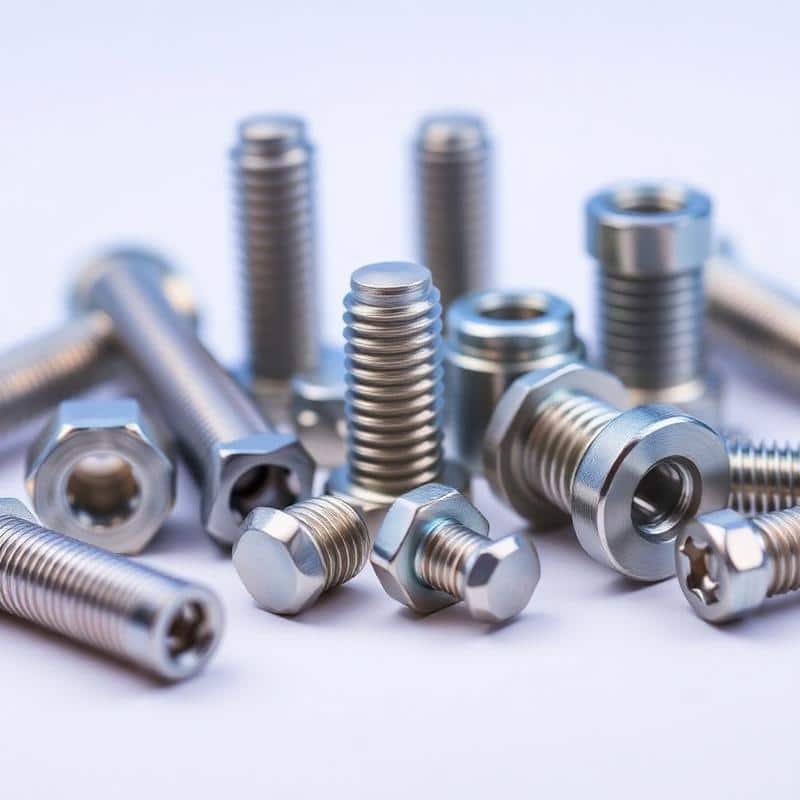

The Zinc-Nickel Plating Process.
Total Process Time: 4-6 Hours
Part Cleaning & Preparation
Parts are thoroughly cleaned to remove oils, greases, rust, and contaminants. Multiple cleaning stages ensure surface is chemically clean for proper plating adhesion.
Activation
Acid activation removes surface oxides and prepares steel surface for plating. Critical for achieving strong metallurgical bond between substrate and coating.
Zinc-Nickel Electroplating
Parts are immersed in alkaline zinc-nickel plating bath. Electric current causes zinc and nickel to co-deposit as an alloy coating. Plating time: 15-45 minutes.
Rinsing
Multiple rinse stages remove plating solution and prevent contamination of subsequent processes.
Chromate Conversion Coating
Parts are immersed in trivalent chromate solution forming a protective layer. Available in clear, yellow/gold, or black finishes.
Baking (High-Strength Steels)
High-strength steel parts (>180 ksi) are baked at 375°F for 3-24 hours to prevent hydrogen embrittlement. Critical for aerospace fasteners.
Sealing (Optional)
Additional topcoat sealers can be applied for extreme corrosion environments. Organic sealers fill micro-pores for extra barrier protection.
Final Inspection
Coating thickness measurement, visual inspection, and adhesion testing ensure parts meet specifications.
Available Chromate Finishes
Natural/Clear
Bright metallic appearance
Yellow/Gold Chromate
Gold iridescent finish
Black Chromate
Non-reflective applications
Benefits of Zinc-Nickel Plating
Superior Corrosion Resistance
10-15x better than standard zinc plating. Salt spray performance: 1,000+ hours to white rust.
Thermal Stability
Maintains protection up to 300°F. Standard zinc degrades above 140°F.
Excellent Paintability
Chromate-treated surface provides excellent adhesion for paint systems.
Hydrogen Embrittlement Resistance
Lower risk compared to cadmium. Suitable for high-strength steel up to 220 ksi.
Uniform Coating Distribution
Good throwing power means recesses and internal features receive adequate coating.
RoHS Compliant
No cadmium or hexavalent chromium. Meets environmental regulations.
Cadmium Replacement
Comparable or better performance with environmental benefits.
Cost-Effective Protection
Excellent value compared to exotic coatings like PVD or thermal spray.
Zinc-Nickel Plating Solutions Across Industries
Aerospace & Aviation
- Structural fasteners
- Landing gear components
- High-strength bolts
- Mission-critical assemblies
Automotive
- Brake systems
- Fuel system components
- Fasteners and connectors
- Under-hood applications
Industrial Equipment
- Hydraulic fittings
- Heavy machinery components
- Electrical enclosures
- Precision mechanical parts

Technical Specifications
Industry Specifications
ASTM B841
Electrodeposited Coatings of Zinc-Nickel Alloy Deposits
AMS 2417
Plating, Zinc-Nickel Alloy (Aerospace)
ISO 19598
Zinc-Nickel Alloy Coatings (International)
SAE J2329
Electrodeposited Coatings of Zinc-Nickel Alloy (Automotive)
MIL-DTL-81706
Plating, Zinc-Nickel Alloy (Defense)
Typical Coating Thickness
Type I (Thin)
Light duty applications
0.0002"
(5 microns min)
Type II (Standard)
General purpose coating
0.0003"
(8 microns min)
Type III (Heavy)
Severe environment protection
0.0005"
(12 microns min)
Coating Thickness
Carbon Steel
1010, 1018, 1020, A36
Alloy Steel
4140, 4340, 8620
High-Strength Steel
Up to 220 ksi with baking
Cast Iron
With proper pre-treatment
Stainless Steel
Anodic coating accelerates corrosion
Aluminum
Not suitable for zinc-nickel
Copper/Brass
Not suitable for zinc-nickel
Note:
Aluminum, copper, and other non-ferrous metals are not suitable for zinc-nickel plating. Contact us for alternative coating solutions for these materials.
Frequently Asked Questions
What is the main advantage of Zinc-Nickel plating over standard Zinc plating?
Zinc-Nickel plating offers significantly higher corrosion resistance compared to standard zinc plating. By co-depositing 12 to 15 percent nickel with the zinc, the resulting finish can withstand over 1,000 hours of salt spray exposure before showing red rust. It also provides better thermal stability and maintains its protective properties at much higher operating temperatures.
Is Zinc-Nickel plating a good replacement for Cadmium?
Yes. Zinc-Nickel is widely recognized as the premier environmentally safe alternative to cadmium plating. It matches or exceeds cadmium in corrosion resistance, offers excellent galvanic compatibility with aluminum, and complies with modern environmental regulations. Our integrated production cells routinely process aerospace and defense components that were previously specified for cadmium.
How long does zinc-nickel plating take?
Typical lead time is 10 to 14 business days from when components arrive at our production facilities. The actual plating process takes 4 to 6 hours including pre-treatment, electroplating, chromate conversion, and inspection. Expedited service is available for critical aerospace and defense projects.
Will this plating process change my part dimensions?
Yes, zinc-nickel is an additive electroplating process. Standard coating thickness ranges from 0.0002 to 0.0006 inches per surface. If your component has tight tolerances or critical threaded holes, we can apply selective masking or adjust our process parameters to ensure the final product meets your exact dimensional requirements.
Do you bake parts for hydrogen embrittlement relief?
Absolutely. High-strength steel components are highly susceptible to hydrogen embrittlement during the electroplating process. We strictly manage post-plating baking procedures within our facilities, typically baking parts at 375 degrees Fahrenheit for 3 to 24 hours depending on the specific alloy, tensile strength, and governing industry specifications.
Does zinc-nickel plating meet aerospace specifications?
Yes. When performed to AMS 2417 or MIL-DTL-81706, our zinc-nickel plating meets stringent aerospace requirements. Our Nadcap-accredited production cells are fully qualified for aerospace critical applications and provide complete documentation, including First Article Inspection reports when required.
What chromate conversion colors are available over Zinc-Nickel?
We offer both clear (natural) and black trivalent chromate conversion coatings over the zinc-nickel deposit. The clear chromate provides a bright, metallic appearance, while the black chromate offers a uniform dark finish often required for automotive components or military applications needing reduced light reflectivity.
Can you plate complex geometries and deep recesses?
Yes. The zinc-nickel alloy plating bath has excellent throwing power, which allows for uniform thickness and alloy distribution even on complex shapes and internal features. Our technical team utilizes advanced racking techniques and precisely engineered anodes to ensure complete and even coverage on every component.