

Mechanical Finishes.
- Quick Specifications
Lead Time
3-7 business days
Materials
Aluminum, Stainless Steel, Carbon Steel, Titanium, Copper Alloys, Tool Steel, Cast Iron
Certifications
AMS 2430
Industries
Aerospace, Automotive, Medical, Defense, Industrial Equipment
Mechanical Finishes
Mechanical finishing processes modify the surface texture of metal components through physical means rather than chemical or electrochemical processes. These techniques are essential for achieving specific surface roughness, removing machining marks, and preparing surfaces for subsequent treatments.
Our integrated production cells offer comprehensive mechanical finishing capabilities including precision grinding for tight tolerances, vibratory finishing for batch processing, shot peening for fatigue resistance, and various blasting media for surface preparation and texturing.
Whether you need a mirror polish for decorative applications, a specific Ra value for functional surfaces, or surface preparation before plating or coating, our manufacturing operations provide the expertise and equipment to meet your exact specifications.
- Precise surface roughness control
- Improved fatigue resistance (shot peening)
- Enhanced appearance
- Optimal coating adhesion prep
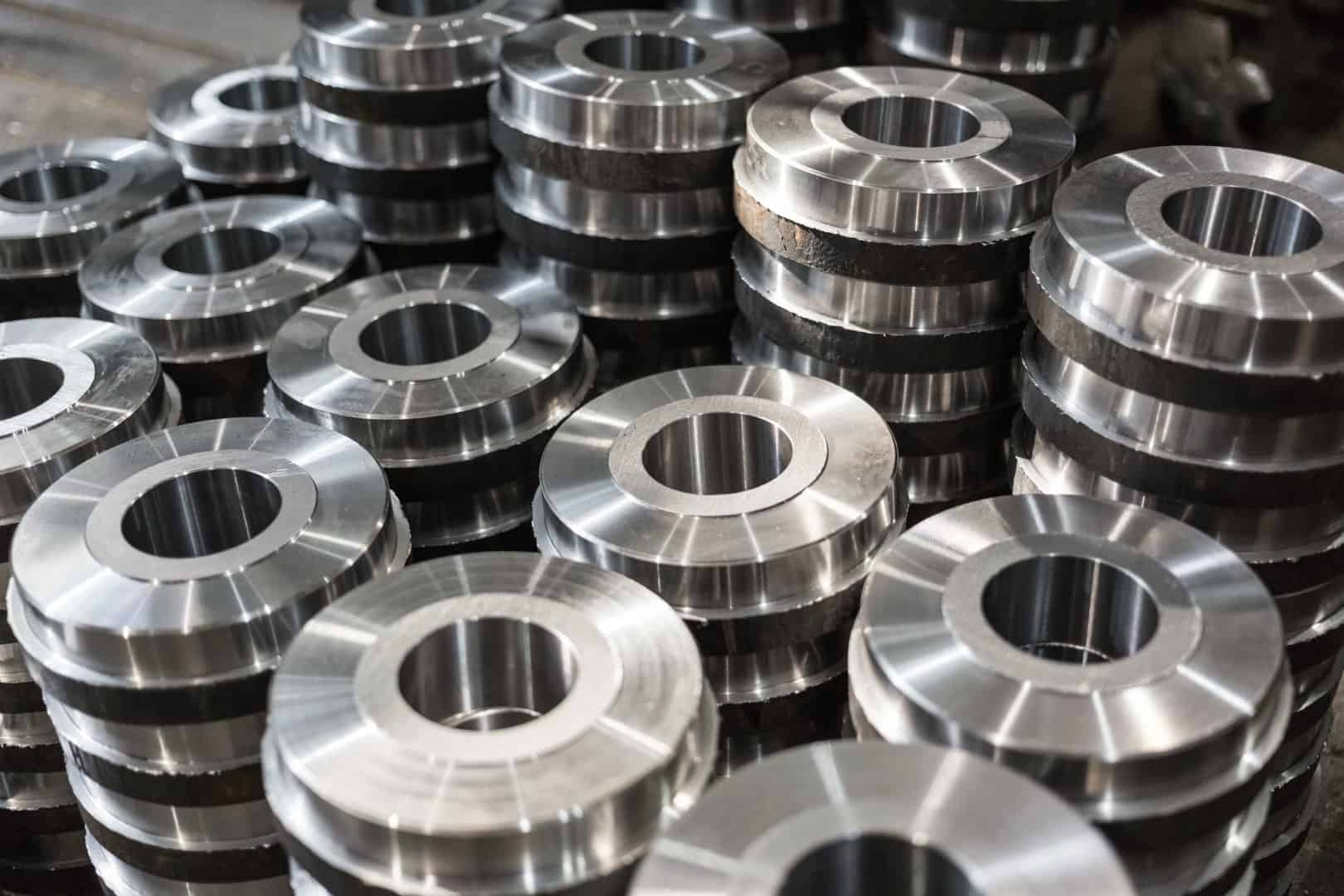

The Mechanical Finishes Process.
Surface Assessment
Current surface condition evaluated and target finish specifications confirmed.
Process Selection
Optimal media, parameters, and equipment selected for your requirements.
Mechanical Processing
Blasting, peening, tumbling, or polishing performed to specification.
Surface Measurement
Ra/Rz measurements and visual inspection verify finish quality.
Cleaning & Packaging
Parts cleaned, protected, and packaged to prevent surface damage.
Baking (High-Strength Steels)
High-strength steel parts (>180 ksi) are baked at 375°F for 3-24 hours to prevent hydrogen embrittlement. Critical for aerospace fasteners.
Sealing (Optional)
Additional topcoat sealers can be applied for extreme corrosion environments. Organic sealers fill micro-pores for extra barrier protection.
Final Inspection
Coating thickness measurement, visual inspection, and adhesion testing ensure parts meet specifications.
Mechanical Finishes Solutions Across Industries
Aerospace & Aviation
Automotive
Medical
Industrial Equipment
Defense

Technical Specifications
Compatible Materials
Aluminum
Titanium
Carbon Steel
Stainless Steel
Copper Alloys
Tool Steel
Available Processes
Vibratory Finishing
Shot Peening
Glass Bead Blasting
Aluminum Oxide Blasting
Precision Grinding
Polishing
Lapping
Tumbling
Frequently Asked Questions
What surface roughness values can you achieve?
Our precision finishing cells can achieve surface finishes from a mirror polish (Ra 2-4 microinches) to specific Ra values required for functional surfaces. Common specifications include Ra 16, 32, 63, and 125 microinches. Discuss your requirements and our team will route your components through the optimal processing line.
What's the difference between shot peening and bead blasting?
Shot peening uses controlled shot to induce compressive stress in the surface, improving fatigue resistance. Bead blasting (glass bead) creates a uniform matte finish for cosmetic purposes without significant stress modification. We help you choose the right process for your application.
Can mechanical finishing be combined with other treatments?
Absolutely. Mechanical finishing is often a preparation step before plating, anodizing, or painting. Common sequences include bead blast before anodizing for a matte finish, or polishing before chrome plating for maximum reflectivity.
What are the size limitations for tumbling and vibratory finishing?
Vibratory finishing is ideal for small to medium parts that fit efficiently into finishing bowls. Very large parts may require manual or robotic hand finishing. Our engineering team assesses your part size and geometry to deploy the most effective and cost-efficient finishing method within our operations.