

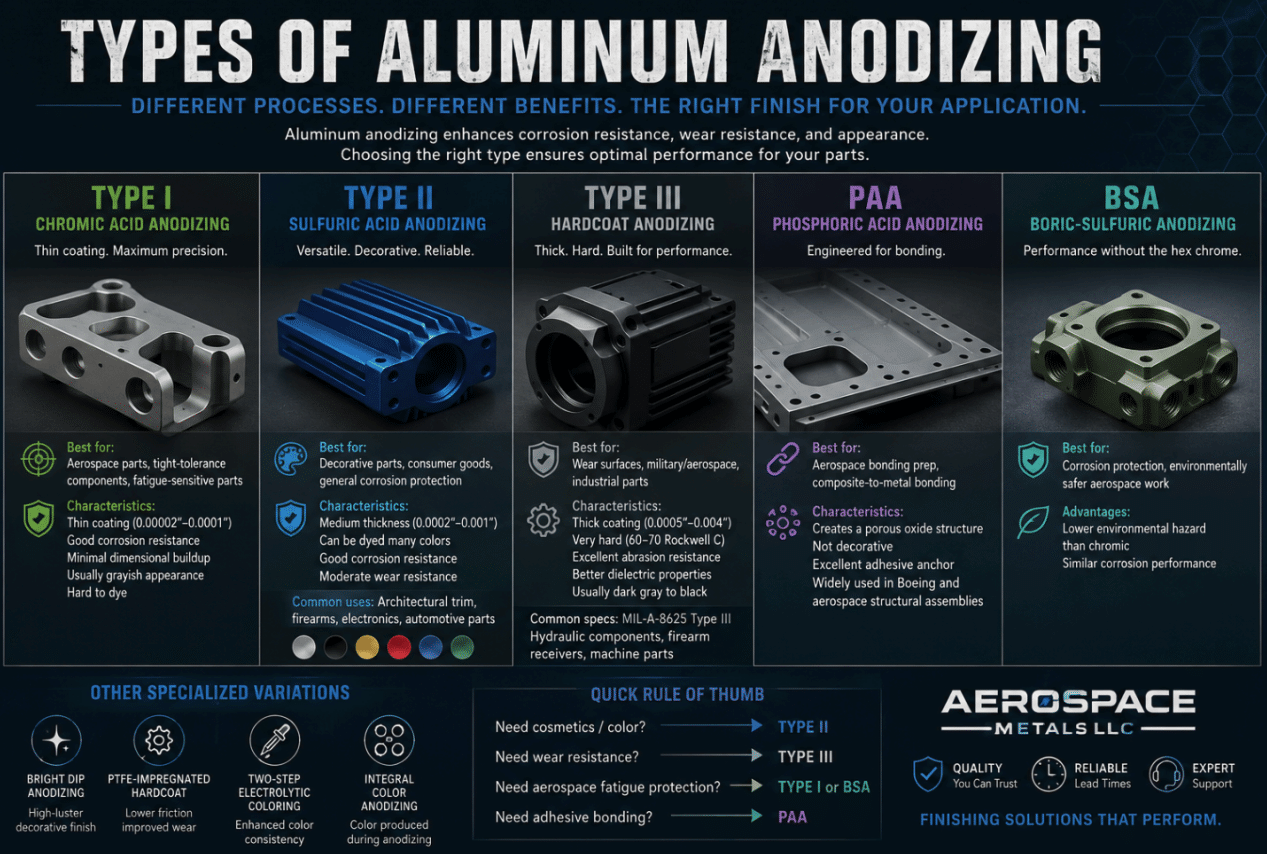
Aluminum anodizing is one of the most widely used surface finishing processes because it improves corrosion resistance, wear resistance, and appearance without sacrificing the lightweight properties that make aluminum so valuable.
However, not all anodizing processes are the same. Depending on your industry, performance requirements, and engineering specifications, selecting the correct anodizing type is essential.
Below is a breakdown of the most common aluminum anodizing processes and where each one excels.
Type I: Chromic Acid Anodizing
Type I anodizing uses chromic acid to create a thin, corrosion-resistant oxide layer with minimal dimensional change.
Because the coating is extremely thin, it’s ideal for components with tight tolerances and parts that cannot tolerate dimensional buildup.
Best Applications
- Aerospace components
- Fatigue-sensitive parts
- Precision-machined components
- Complex geometries
Benefits
- Excellent corrosion resistance
- Minimal dimensional growth
- Less impact on fatigue strength
- Ideal for tight-tolerance applications
Considerations
- Lower wear resistance than other anodizing types
- Difficult to dye
- Environmental regulations surrounding hexavalent chromium have led many manufacturers to seek alternative processes
Type II: Sulfuric Acid Anodizing
Type II sulfuric acid anodizing is the most commonly specified anodizing process across commercial industries. It provides an excellent balance of corrosion protection, durability, and cosmetic appearance.
One of its biggest advantages is the ability to accept dyes, making it the preferred choice for decorative finishes.
Common Finish Options
- Clear Anodize
- Black Anodize
- Colored Anodize
Typical Applications
- Consumer products
- Electronics
- Automotive components
- Firearms
- Architectural aluminum
Benefits
- Excellent corrosion resistance
- Attractive decorative finish
- Wide variety of color options
- Cost-effective solution for many applications
Type III: Hardcoat Anodizing
When maximum durability is required, Type III Hardcoat Anodizing is often the preferred solution.
This process creates a significantly thicker, denser oxide layer that dramatically increases surface hardness and wear resistance.
Hardcoat anodizing is commonly specified under MIL-A-8625 Type III for demanding military, aerospace, and industrial applications.
Ideal For
- Hydraulic components
- Machine parts
- Firearm receivers
- Aerospace hardware
- Wear surfaces
Benefits
- Outstanding abrasion resistance
- Extremely hard surface (often comparable to 60–70 Rockwell C)
- Excellent dielectric properties
- Improved service life in harsh environments
Hardcoat coatings naturally appear dark gray to black, although appearance may vary depending on the aluminum alloy.
Phosphoric Acid Anodizing (PAA)
Unlike decorative anodizing, phosphoric acid anodizing is designed to prepare aluminum surfaces for adhesive bonding.
Rather than maximizing wear resistance, this process creates a highly porous oxide layer that provides an exceptional anchor for structural adhesives.
Common Uses
- Aerospace structural assemblies
- Composite-to-metal bonding
- Aircraft manufacturing
- Adhesive bonding applications
This process is widely used throughout the aerospace industry, including many Boeing manufacturing specifications.
Boric-Sulfuric Acid (BSA) Anodizing
Boric-sulfuric anodizing was developed as a more environmentally friendly alternative to chromic acid anodizing.
It provides corrosion protection similar to Type I while reducing environmental concerns associated with chromium-based processes.
Advantages
- Excellent corrosion resistance
- Lower environmental impact
- Suitable replacement for many aerospace applications
As environmental regulations continue to evolve, BSA anodizing has become increasingly common throughout the aerospace industry.
Other Specialized Anodizing Processes
Depending on the application, engineers may also specify specialized anodizing finishes, including:
- Bright Dip Anodizing for a high-luster decorative appearance
- PTFE-Impregnated Hardcoat for reduced friction and improved wear
- Two-Step Electrolytic Coloring for enhanced color consistency
- Integral Color Anodizing for color produced during the anodizing process itself
These specialty finishes are often selected for unique performance or cosmetic requirements.
Which Anodizing Process Should You Choose?
Selecting the right anodizing process ultimately depends on your application’s performance requirements.
| Application Need | Recommended Process |
| Decorative finish and color | Type II Sulfuric Anodizing |
| Maximum wear resistance | Type III Hardcoat Anodizing |
| Tight tolerances and fatigue-sensitive aerospace parts | Type I Chromic Acid Anodizing |
| Aerospace corrosion protection with reduced environmental impact | Boric-Sulfuric Anodizing |
| Adhesive bonding preparation | Phosphoric Acid Anodizing |
Partner with Aerospace Metals for Aluminum Finishing Solutions
At Aerospace Metals, we provide high-quality aluminum anodizing services for aerospace, defense, medical, industrial, and commercial applications. Whether your project calls for Type I, Type II, Hardcoat Anodizing, Bright Dip, or specialty finishing processes, our team is committed to delivering consistent quality, reliable lead times, and exceptional customer service.
Not sure which anodizing process is right for your part? Our experienced team is here to help you determine the best finishing solution based on your engineering requirements, specifications, and performance goals.
Contact Aerospace Metals today to discuss your next anodizing project.