

5-Axis CNC Milling .
- Quick Specifications
Lead Time
10-15 business days
Certifications
ISO 9001
Compatible Materials
Aluminum, Titanium, Inconel, Stainless Steel, Tool Steel, Plastics
Industries
Aerospace, Defense, Medical, Energy
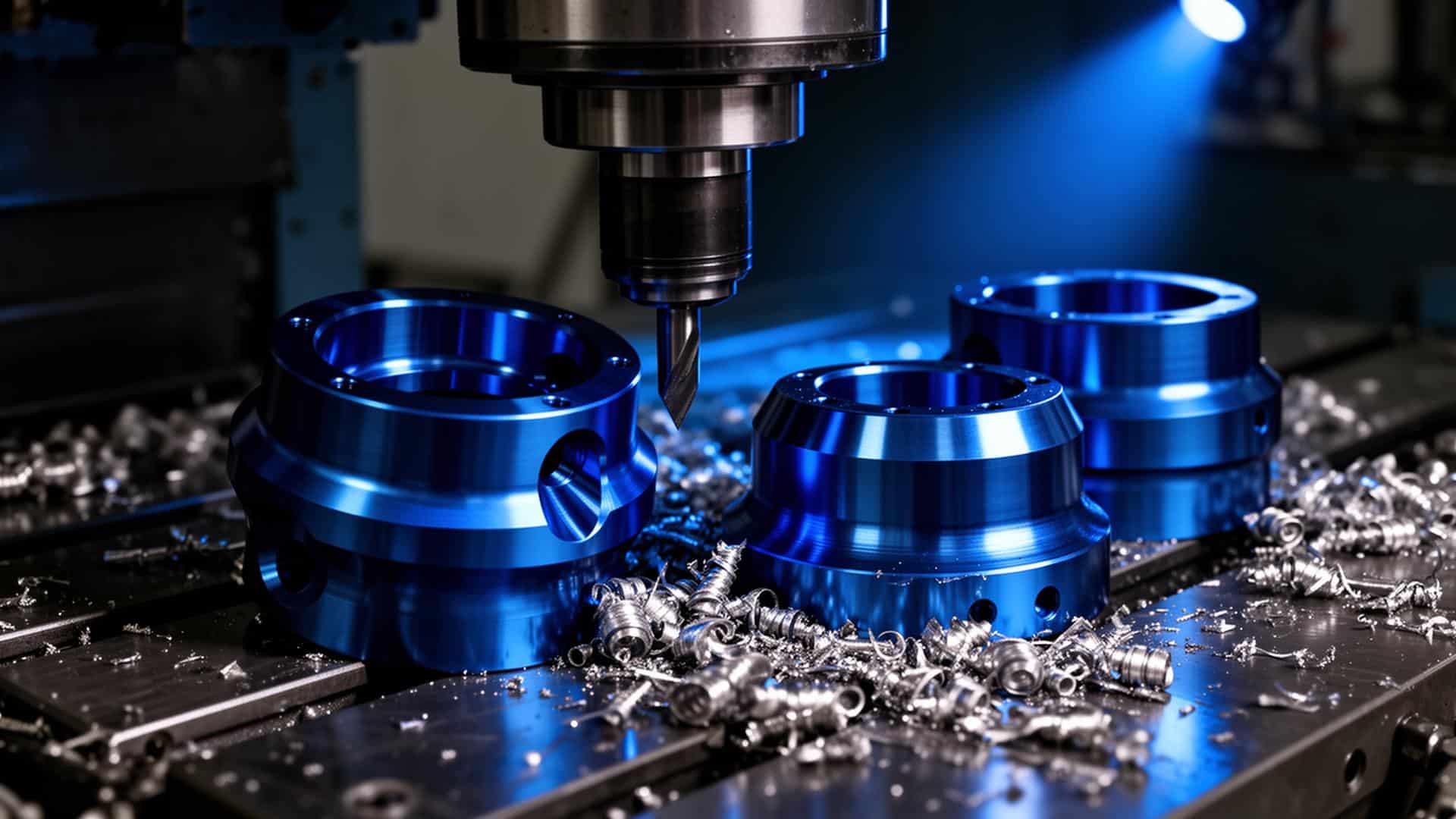

5-Axis CNC Milling
5-axis CNC milling enables machining of complex geometries in a single setup, reducing handling and improving accuracy. The ability to approach the workpiece from any angle allows production of intricate contours, undercuts, and compound surfaces impossible with 3-axis machines.
Our integrated machining cells maintain tight tolerances (±0.0005″ typical) on complex aerospace and medical components. 5-axis machining significantly reduces setup time and improves surface finish for demanding applications.
- Complex geometries
- Single-setup machining
- Tight tolerances
- Superior surface finish
How 5-Axis CNC Milling Works.
Design Review
Our engineers review your CAD files for manufacturability, suggesting optimizations for 5-axis machining.
CAM Programming
Advanced toolpath programming optimizes tool engagement, minimizes setups, and ensures collision-free machining.
5-Axis Machining
Simultaneous 5-axis movement enables complex contours and features to be machined in a single setup.
Inspection & QC
CMM verification confirms dimensional accuracy. First article inspection for production runs.
Finishing & Delivery
Secondary finishing if required, careful packaging, and delivery to your specifications.
5-Axis CNC Milling Solutions Across Industries
Aerospace & Aviation
Defense
Medical Services
Energy

Available Certifications Across Our Production Cells
ISO 9001:2015
AS9100 Rev D
Nadcap
ISO 13485
ITAR Registered
Technical Specifications
Compatible Materials
Aluminum
Titanium
Inconel
Stainless Steel
Tool Steel
Plastics
Available Processes
Simultaneous 5-Axis
3+2 Positioning
High-Speed Milling
Hard Milling
Frequently Asked Questions
What materials can you process with 5-axis CNC milling?
Our advanced machining cells handle a wide variety of materials including aerospace grade aluminum, titanium, stainless steel, Inconel, tool steel, and high performance plastics.
What tolerances can you achieve with 5-axis milling?
We routinely hold tolerances as tight as plus or minus 0.0005 inches on complex geometries. Specific tolerances depend on the material and part configuration, which our engineering team will review during the quoting process.
What is the advantage of simultaneous 5-axis machining?
Simultaneous 5-axis machining allows the cutting tool to move continuously across five axes at the same time. This creates ultra smooth contoured surfaces and complex geometries that are impossible to achieve with standard 3-axis equipment.
How does 5-axis milling reduce my part costs?
By allowing us to machine five sides of a part in a single setup, we eliminate the need for multiple fixtures and manual repositioning. This drastically reduces labor time, minimizes the risk of setup errors, and accelerates overall production speed.
Do you offer rapid prototyping for CNC milled parts?
Yes, our dedicated production cells are equipped to handle rapid prototyping and short run production. We can quickly turn your CAD models into physical parts for testing and validation before moving into full scale manufacturing.
Do you handle post machining surface finishes?
Absolutely. As an integrated manufacturer, we seamlessly route your machined components directly into our finishing cells for anodizing, plating, or painting without the delays of shipping parts to outside vendors.
What CAD and CAM file formats do you accept?
We accept all major file formats including STEP, IGES, SolidWorks, and DXF. Our engineering team utilizes advanced CAM software to translate your models into highly optimized machining toolpaths.
Are your machining operations certified for aerospace and defense?
Yes, our production operations maintain ISO 9001:2015 and AS9100 Rev D certifications. We are fully equipped to handle strict aerospace and defense requirements, including comprehensive First Article Inspection reporting.