

Bright Dip Anodizing.
- Quick Specifications
Lead Time
7-10 days
Materials
6061, 5052+
Certifications
ISO 9001
Finish
Mirror Reflective

What Is Bright Dip Anodizing?
Bright dip anodizing is a specialized chemical and electrochemical finishing process that produces a highly reflective, mirror-like surface on aluminum. This premium decorative finish combines chemical brightening with protective anodizing to create stunning visual effects while maintaining excellent corrosion resistance.
The process uses a phosphoric-nitric acid bath to chemically polish the aluminum surface, removing microscopic surface irregularities and creating up to 95% specular reflectivity—approaching true mirror quality.
Following the bright dip, a clear anodic coating of 0.0001″ to 0.0003″ is applied to protect the brilliant finish from oxidation, fingerprints, and environmental degradation while maintaining optical clarity.
95%
Reflectivity
0.3
mil Coating
336+
Hours Salt Spray
The Bright Dip Anodizing Process.
Total Process Time: 4-6 hours depending on part complexity
Cleaning & Degreasing
Parts are thoroughly cleaned to remove oils, fingerprints, and contaminants. Surface must be absolutely clean for uniform bright dip results.
Alkaline Etch
Light caustic etch removes surface oxides and prepares aluminum for bright dipping. Etch time is minimized to preserve surface smoothness.
Desmutting
Acid treatment removes smut (etch byproducts) and alloy constituents that would interfere with bright dip uniformity.
Bright Dip (Chemical Polish)
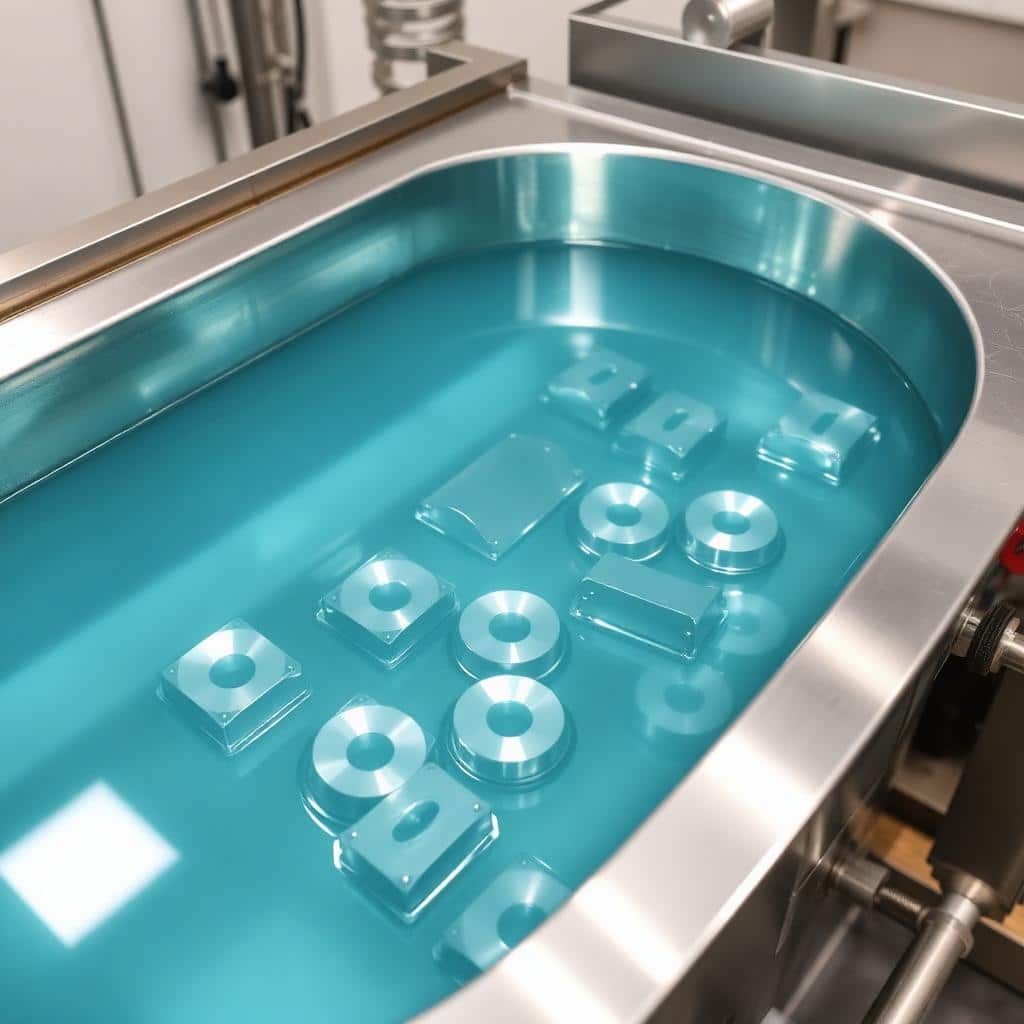
Parts immersed in phosphoric-nitric acid bath at elevated temperature. Chemical reaction dissolves surface irregularities, creating mirror-like finish. Critical step requiring precise temperature and time control.
Clear Anodizing
Sulfuric acid anodizing applies thin, transparent protective oxide layer. Thickness typically 0.0001"-0.0003" to maintain optical clarity while providing corrosion protection.
Dyeing (Optional)
If colored finish specified, parts are immersed in dye solution. Colors appear brilliant and jewel-like due to reflective underlayer. Clear anodize most common.
Sealing
Hot water or nickel acetate sealing closes anodic pores, enhancing corrosion resistance and locking in dye (if colored).
Final Inspection
Coating thickness measurement, visual inspection, and dimensional verification ensure parts meet specifications.
Benefits of Bright Dip Anodizing
Mirror-Like Reflectivity
Up to 95% specular reflectivity creates brilliant, mirror-quality finish that enhances product aesthetics and perceived value.
Corrosion Protection
Clear anodic layer provides excellent barrier against oxidation, environmental exposure, and chemical attack.
Vibrant Color Options
Reflective underlayer makes dyed colors appear more brilliant and jewel-like compared to standard anodizing.
Fingerprint Resistance
Sealed anodic coating resists fingerprints and smudges, maintaining clean appearance with minimal maintenance.
Premium Appearance
Creates high-end, luxury appearance that commands premium pricing in consumer markets.
Optical Clarity
Thin coating maintains excellent light transmission and reflection properties for lighting and optical applications.
Environmentally Friendly
Modern bright dip processes use recyclable chemistries with minimal environmental impact compared to chrome-based alternatives.
UV Stability
Resistant to UV degradation, weathering, and environmental exposure. Does not fade or break down over time.
Where Bright Dip Anodizing Solutions Across Industries
Automotive
- Interior trim pieces
- Decorative emblems
- Door handles
Electronics
- Smartphone bezels and frames
- Laptop enclosures
- Tablet housings
Industrial Equipment
- Decorative panels
- Elevator interiors
- Building signage
Lighting & Reflectors
- Light reflectors
- Lamp housings
- Flashlight bodies

Technical Specifications
Compatible Materials
1100
Best bright dip response
6061
Very good results
6063
Excellent for extrusions
5052
Excellent results
3003
Good results
5005
Good uniformity
High-copper alloys (2024, 7075) produce less uniform results due to copper content affecting brightness.
Mil-Spec Compliance
ASTM B580 Type A
Bright anodic coatings
MIL-A-8625 Type II
Clear sulfuric acid anodizing
AMS 2471
Anodic Treatment of Aluminum
Coating Thickness
Decorative Clear
2.5-5 microns
0.0001" - 0.0002"
Standard Clear
5-7.5 microns
0.0002" - 0.0003"
Protected Clear
7.5-10 microns
0.0003" - 0.0004"
Compatible Materials
Natural/Clear
Black
Champagne
Gold
Red
Blue
Reflectivity
85-95% specular reflectivity
Approaching true mirror quality for decorative applications
Salt Spray Resistance
336+ hours per ASTM B117
Sealed coating provides excellent environmental protection
How Hardcoat Compares
| Feature | Bright Dip | Type II | Type III (Hardcoat) | Chrome Plating |
|---|---|---|---|---|
| Reflectivity | 85–95% | 40–60% | 20–30% | 60–70% |
| Coating Thickness | 0.0001"–0.0003" | 0.0002"–0.001" | 0.0008"–0.004" | 0.0001"–0.001" |
| Surface Hardness | 40–50 HRC | 40–50 HRC | 60–70 HRC | 65–70 HRC |
| Corrosion Resistance | Excellent | Excellent | Excellent | Good |
| Appearance | Mirror / Brilliant | Semi-gloss | Matte gray | Mirror |
| Color Vibrancy | Excellent | Good | Limited | N/A |
| Cost | $$ | $ | $$$ | $$$$ |
| Lead Time | 7–10 days | 5–7 days | 10–14 days | 14–21 days |
| Best For | Decorative | General use | Wear resistance | Functional mirror |
Bright dip anodizing is the optimal choice when visual impact and premium appearance are primary requirements. For functional wear resistance, consider Type III hardcoat. For general protection, Type II offers excellent value.
Quality You Can Trust
Decorative Finish Expertise
ISO 9001:2015 Certified
- Documentation Provided
- Certificate of Conformance (CoC)
- Material certifications and traceability
- Process parameter logs
- Reflectivity measurements
- Coating thickness verification
- Salt spray test reports (when specified)
- Visual inspection documentation
- Color match verification (for dyed parts)
Why Choose Aerospace Metals.
Decorative Finish Expertise
Our specialized production cells deliver premium decorative aluminum finishing for consumer electronics, automotive, and luxury goods.
Consistent Results
Precise process control ensures batch-to-batch consistency for production volumes.
Engineering Support
Not sure if hardcoat is right? We'll review your requirements and recommend the optimal surface treatment.
Multi-Process Projects
Machining before anodizing? Masking? Post-anodize machining? We manage and execute all processes seamlessly under a single point of accountability.
Fast Turnaround
Managed capacity for urgent projects without compromising quality. Rush service available for AOG and critical situations.
Complete Documentation
Full traceability packages including process logs, thickness measurements, test reports, and First Article Inspection when required.
Frequently Asked Questions
What is bright dip anodizing?
Bright dip anodizing is a two-step process combining chemical polishing (bright dipping) with clear anodizing. The chemical polish creates a mirror-like reflective surface, while the anodize layer protects this brilliant finish from oxidation and environmental damage.
Which aluminum alloys work best for bright dip?
Pure aluminum alloys (1100) and low-copper alloys (5052, 6061, 6063) produce the best results. High-copper alloys (2024, 7075) produce less uniform brightness due to copper content affecting the chemical polishing reaction.
How reflective is bright dip anodized aluminum?
Properly processed bright dip anodizing achieves 85-95% specular reflectivity, approaching true mirror quality. Actual reflectivity depends on base alloy, surface condition before processing, and process parameters.
Can bright dip anodized parts be colored?
Yes! The reflective underlayer makes dyed colors appear more vibrant and jewel-like compared to standard anodizing. Common colors include gold, champagne, blue, red, and black. Clear (natural) is most popular for maximum reflectivity.
What is the lead time for bright dip anodizing?
Standard lead time is 7-10 business days from receipt of parts. The actual process takes 4-6 hours. Rush service is available for time-critical product launches or prototype work.
How does bright dip compare to mechanical polishing?
Bright dip produces more uniform results than mechanical polishing, especially on complex geometries. It also creates a chemically clean surface ideal for subsequent anodizing. Mechanical polishing may be preferred for very large flat surfaces or specific textures.
Is bright dip environmentally friendly?
Modern bright dip processes use recyclable phosphoric-nitric acid chemistry with significantly less environmental impact than older chromic acid processes. Our integrated production cells operate as fully EPA-compliant facilities with advanced, proper waste treatment.
Will fingerprints show on bright dip anodized parts?
The sealed anodic coating resists fingerprints better than bare polished aluminum. However, on highly reflective surfaces, some fingerprinting may be visible. For fingerprint-critical applications, we recommend anti-fingerprint coatings or matte finishes.